
Field Trips That Get Kids Moving: Why Active Field Trips Matter
Field trips are one of the most memorable parts of the school year. They give students an opportunity to step outside their normal classroom routine, experience something new, spend time with their classmates, and learn in a completely different environment.
But not every field trip has to involve sitting on a bus, walking through exhibits, or listening to a presentation.
For schools looking for something different, active field trips give kids an opportunity to move, play, problem-solve, and challenge themselves while still providing a valuable experience outside the classroom.
From obstacle courses and climbing activities to team challenges and other hands-on experiences, active field trips can combine physical activity with confidence building, teamwork, and plenty of fun.
For schools in the Charlotte area, an active field trip can be an especially exciting option for elementary and middle school students who are ready to get moving.
What Is an Active Field Trip?
An active field trip is an experience that makes physical movement a major part of the activity.
Instead of primarily observing, listening, or watching, students participate.
That might mean climbing, running, balancing, jumping, navigating obstacles, completing team challenges, exploring nature, participating in sports, or trying an activity they have never experienced before.
There is certainly a place for traditional educational field trips. Museums, historical sites, science centers, theaters, and other destinations can provide fantastic learning experiences.
Active field trips simply offer something different.
They give students an opportunity to use their bodies as part of the experience. For kids who spend much of their school day sitting at desks, that change of pace can make the trip particularly memorable.
Kids Get an Opportunity to Move
One of the most obvious advantages of an active field trip is also one of the most important: kids get to move.
Students spend a significant portion of the school day in structured classroom environments. Even with recess and physical education, there can still be plenty of sitting throughout a typical day.
An active field trip turns movement into the main event.
Instead of asking students to remain quiet and observe for several hours, an active trip encourages them to participate. They can run, climb, balance, jump, stretch, and explore.
And because the physical activity is part of a fun experience, it may not even feel like exercise.
Students aren't necessarily thinking about how much they're moving. They're thinking about reaching the next obstacle, completing the challenge, keeping up with their friends, or accomplishing something they weren't sure they could do.
That can be especially valuable for children who don't naturally gravitate toward traditional organized sports.
Active Field Trips Can Include Everyone
When people think about physical activities for children, competitive sports often come to mind first.
But not every child enjoys basketball, soccer, baseball, or other traditional team sports.
That's one reason obstacle-based and activity-focused field trips can be such a good alternative.
An active field trip doesn't necessarily have to be about winning a game. Instead, students can work at their own level and focus on completing individual challenges.
One child might fly through a balance obstacle while another takes their time. Someone who isn't the fastest runner might discover that they're great at climbing. Another student may surprise themselves by making it through an obstacle that looked impossible at first.
The goal becomes participation and progress rather than determining which team wins.
That creates opportunities for different students to succeed.
Movement Can Be a Learning Experience Too
A field trip doesn't have to look like a traditional lesson to provide educational value.
Active experiences can require students to think constantly.
Consider something as simple as navigating an obstacle course.
A student might need to decide where to put their feet, how much momentum they need, which route is easiest, how to maintain their balance, or whether they need to change their approach after an unsuccessful attempt.
That's problem-solving in real time.
Physical challenges can introduce students to concepts involving balance, coordination, spatial awareness, body control, timing, and cause and effect.
Students receive immediate feedback from their decisions. If one approach doesn't work, they can adjust and try again.
That combination of thinking and movement is part of what makes active field trips so engaging.
Building Confidence Through New Challenges
One of the best moments on an active field trip is watching a student accomplish something they initially weren't sure they could do.
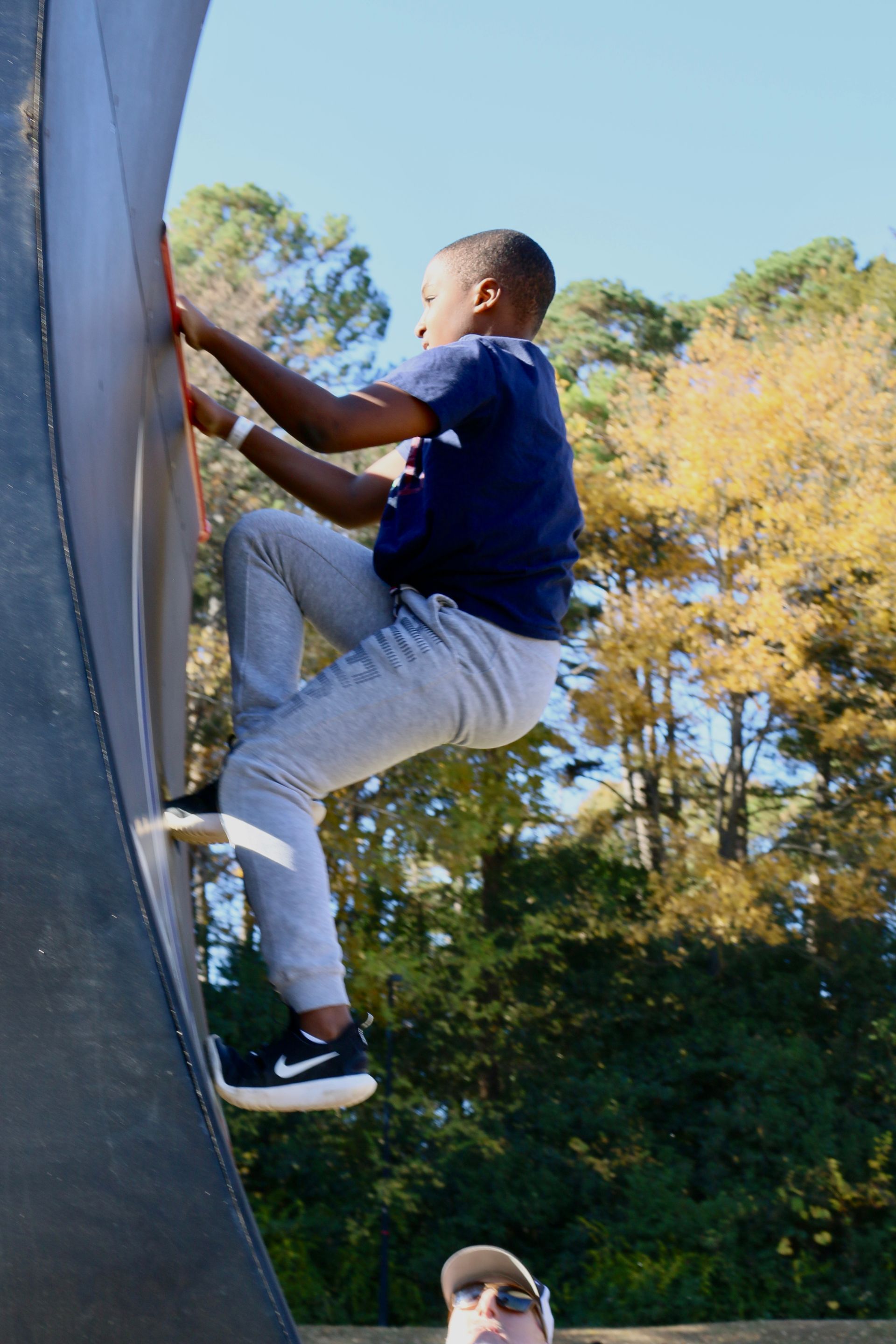
Maybe it's climbing to the top of an obstacle.
Maybe it's crossing something without touching the ground.
Maybe it's swinging from one platform to another.
Or maybe it's simply participating after initially feeling nervous.
Physical challenges give kids opportunities to experience small successes throughout the day.
A student might begin by saying, "I can't do that."
Then they try.
Maybe they don't complete it the first time. They make an adjustment and try again.
Eventually, they make it.
That moment can be much more meaningful than simply completing an obstacle. Students get to see firsthand that something difficult can become achievable with practice, persistence, and a willingness to try.
Learning That It's Okay to Try Again
Not every obstacle is going to work on the first attempt.
That's actually part of the experience.
Active field trips create a low-stakes environment where students can practice failing, adjusting, and trying again.
If a student loses their balance or can't complete an obstacle, nothing terrible happens. They can reset and give it another shot.
This can help reinforce an important lesson: struggling with something doesn't mean you can't do it.
Sometimes the solution is trying a different technique. Sometimes it takes practice. Sometimes asking for help makes the difference.
Learning to respond positively when something doesn't work is a skill that extends far beyond physical activities.
Encouraging Teamwork and Positive Peer Support
Active field trips can also create great opportunities for classmates to encourage one another.
Kids naturally start cheering when a friend attempts a difficult challenge.
"You've got it!"
"Try again!"
"Put your foot there!"
Those little moments can turn an individual challenge into a shared experience.
Teachers may also see students interact differently than they do in the classroom. A student who isn't normally the first to speak during a lesson might become the person helping classmates figure out an obstacle.
Someone else might emerge as an enthusiastic cheerleader for the group.
Physical activities can give students new ways to connect and contribute.
A Different Kind of School Memory
Ask adults what they remember about elementary school, and there's a good chance field trips will come up.
There's a reason.
Field trips break the routine.
Everything about the day feels different: getting on the bus, arriving somewhere new, exploring with friends, and participating in activities that don't happen during a normal school day.
Active field trips add another layer because students aren't simply visiting somewhere—they're doing something.
They may remember the obstacle they finally completed, the challenge their friend helped them through, or the moment their entire class started cheering.
Those experiences can stick with students long after the trip is over.
Active Field Trips Can Be Great Reward Trips
Not every field trip has to connect directly to a particular classroom unit.
Schools also need opportunities to celebrate students.
An active field trip can be a great option for:
- End-of-year celebrations
- Attendance rewards
- Positive behavior incentives
- Grade-level celebrations
- PE-related outings
- Student achievement rewards
- After-school programs
- Summer programs and camps
Instead of simply giving students free time, schools can provide a structured experience that still feels like a celebration.
For elementary and middle school students in particular, being told they're spending part of the school day running through obstacles with their friends can be a pretty exciting reward.
Active Field Trips Work Especially Well for PE Programs
Physical education teachers can also use field trips to introduce students to activities they may not encounter during a typical PE class.
Ninja-style obstacles, climbing, parkour-inspired movement, and similar activities require a combination of strength, balance, coordination, agility, and body control.
They're also highly adaptable.
Students don't all have to perform at the same level. Challenges can often be approached in different ways depending on a child's age, ability, and confidence.
For PE programs trying to expose students to different forms of physical activity, an active field trip can be a fun way to expand beyond traditional sports.
What Should Schools Look for in an Active Field Trip?
The right destination depends on the age of the students, size of the group, goals of the trip, and available budget.
However, there are several questions teachers and administrators should consider.
Will students actually be participating for a significant portion of the visit? Are activities appropriate for the group's age range? Is there enough variety to keep different students engaged? Will staff provide instructions and help manage activities? Can the facility accommodate the size of your group?
Logistics matter too.
Schools should ask about pricing, scheduling, bus access, required paperwork, clothing recommendations, supervision expectations, and any policies they need to communicate to parents before the trip.
A good field trip provider should make those details easy for the school to understand before arrival.
Ninja Warrior Field Trips in Charlotte
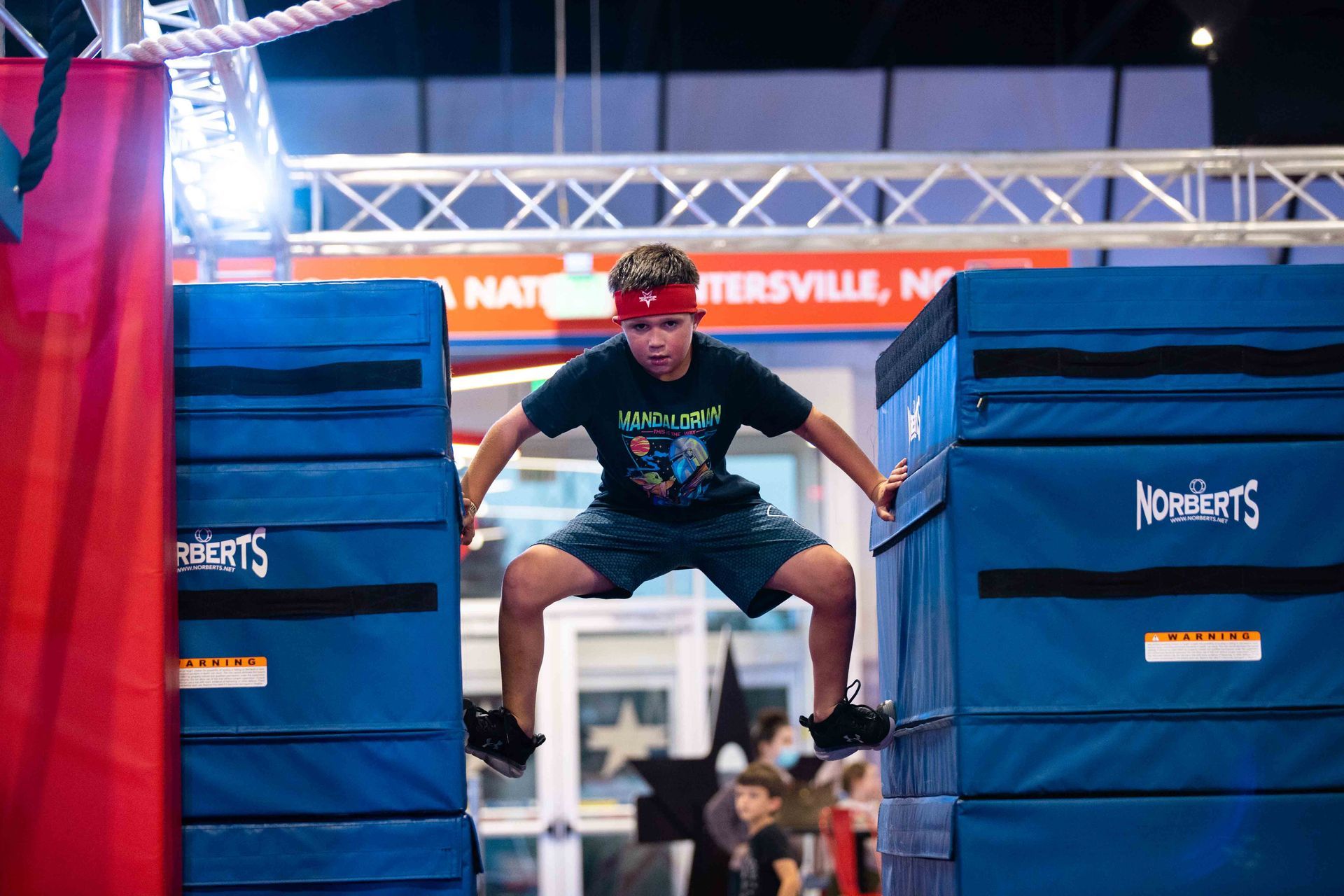
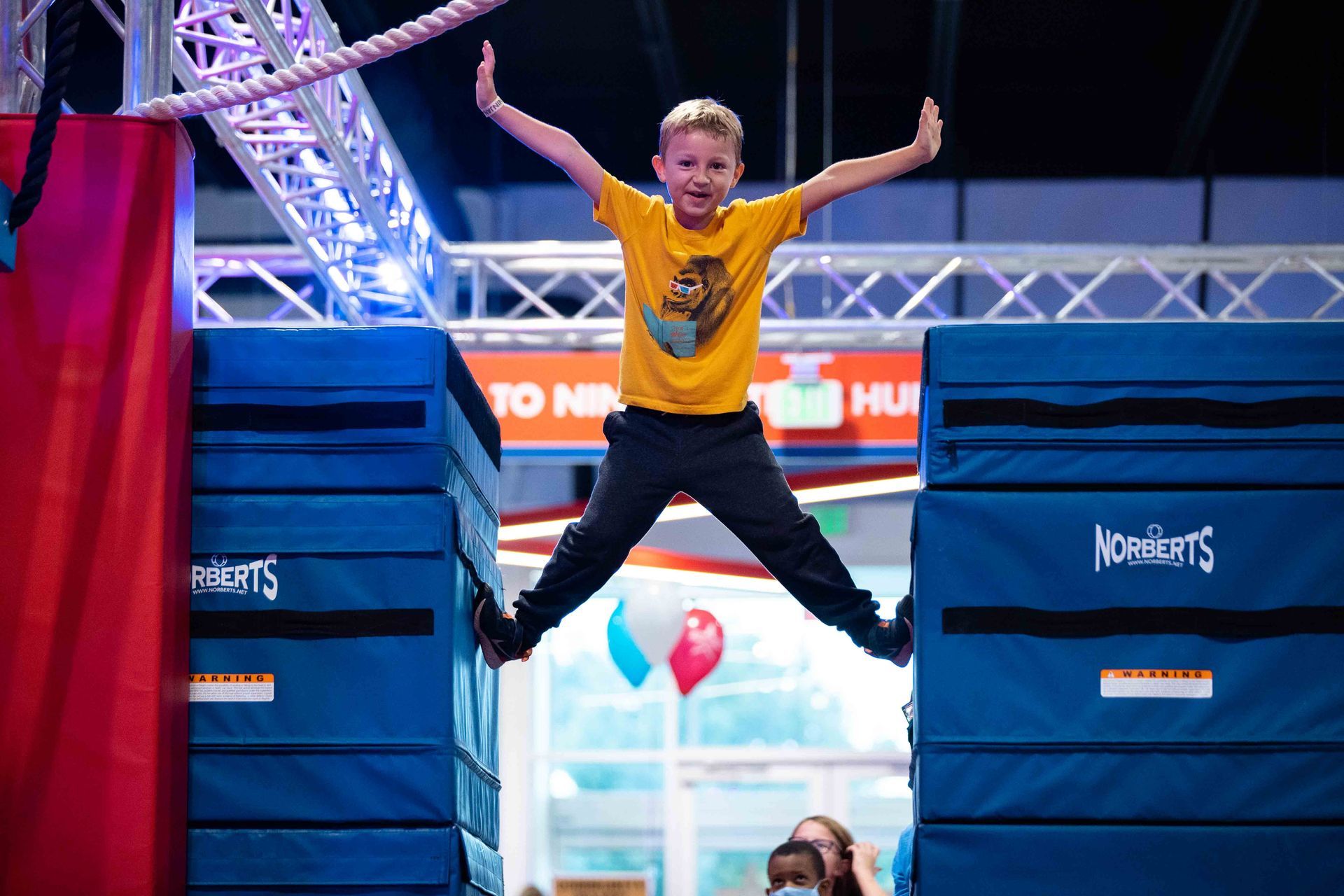
For schools around Charlotte looking for an active field trip, Carolina Ninja Academy in Huntersville, NC offers students an opportunity to experience a gym filled with Ninja Warrior-style obstacles and physical challenges.
Rather than spending the entire trip watching or listening, students get to participate.
Kids can climb, swing, balance, jump, navigate obstacles, and challenge themselves throughout their visit.
Our field trips are designed to give groups a fun and active experience while allowing students of different skill levels to participate.
You don't need to be a competitive athlete or have previous ninja experience.
For many students, the field trip is their first time trying Ninja Warrior-style obstacles.
That's part of the fun.
Coaches can introduce students to the space and activities while kids explore different challenges throughout the gym.
For teachers, PE programs, homeschool groups, camps, and other youth organizations, it provides an alternative to a traditional field trip while still giving students a structured group activity.
Field Trips Aren't Just About Where Kids Go
When planning a field trip, it's easy to focus entirely on the destination.
But it's also worth thinking about what students will actually do once they arrive.
Will they watch?
Will they listen?
Will they explore?
Will they work together?
Will they be challenged?
Will they get to move?
There's no single type of field trip that's right for every school or every situation. Students can benefit from visiting museums, theaters, historical sites, science centers, nature preserves, and many other destinations.
But sometimes kids need an experience where they're encouraged to move.
An active field trip gives students a chance to step away from their desks, challenge themselves physically, interact with classmates in a different environment, and hopefully head back to school with a story they're excited to tell.
For schools searching for active field trips in Charlotte, NC, Carolina Ninja Academy offers a field trip experience built around movement, challenges, and fun.
Whether you're planning a grade-level trip, PE outing, student reward, homeschool event, summer camp trip, or end-of-year celebration, an active field trip might be exactly the change of pace your group needs.